Start with the outcome, not a haircut
Tree pruning is most useful when it has a clear purpose. A homeowner may want branches away from a roof or walkway, improved clearance over a driveway, removal of dead or damaged limbs, or a more balanced appearance. Explain the concern and the result you hope to achieve rather than asking for an undefined amount of trimming. The right scope depends on the species, structure, condition, surrounding space, and the amount of live canopy that can be removed responsibly.
In Ocala, trees provide shade and shape outdoor spaces, and branches can grow toward buildings, paths, or utility corridors. That does not mean every branch close to a structure needs to be removed. A site-specific discussion can distinguish a genuine clearance issue from normal growth and identify how much work is reasonable. If you have noticed a change—such as a cracked limb or dieback—describe what you see without trying to diagnose its cause.
Pruning for clearance and tree structure
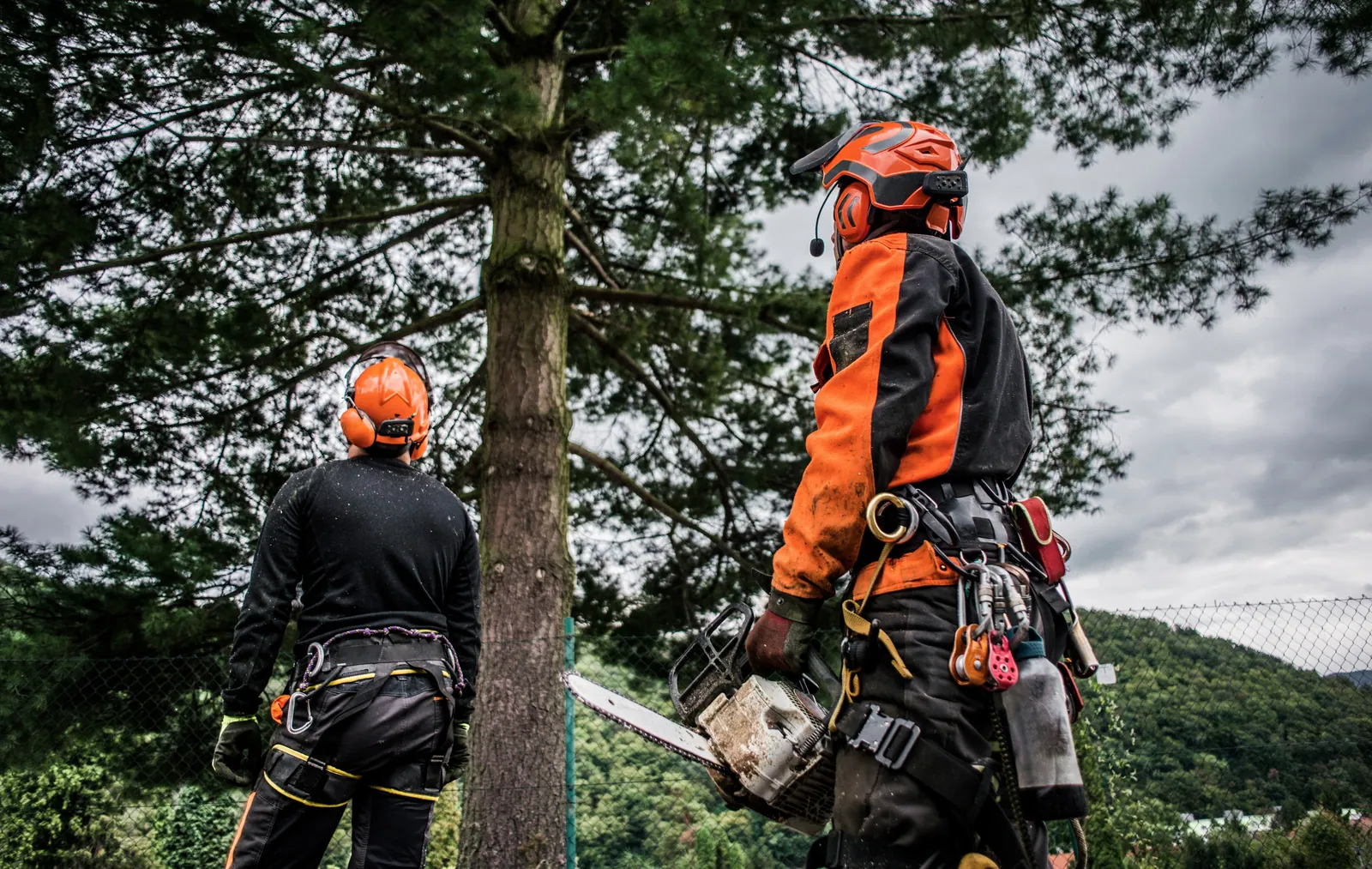
A pruning plan may involve selective cuts to address specific branches while preserving the tree’s overall form. Tell the crew which routes need clearance and which parts of the yard matter most. Point out roofs, gutters, fences, parked vehicles, play areas, garden beds, and any neighboring property concerns. If branches approach electrical equipment or lines, stop and contact the utility; line-clearance work requires the utility’s direction and should not be treated as routine homeowner pruning.
Avoid tree topping—cutting back major limbs to stubs or reducing the crown indiscriminately—as a standard way to control height. It can leave large wounds and stimulate weakly attached regrowth, while failing to solve the underlying space conflict. Ask what specific cuts are proposed and why. If the desired clearance cannot be achieved without removing an unreasonable portion of the canopy, discuss alternatives and whether the tree is suited to the location.
Make a property-specific plan
Before work, agree on the branches or zones in scope and the expected cleanup. Clarify whether brush and larger wood will be hauled away, left in a designated place, or handled another way. Access is also important: a narrow gate, soft ground, irrigation, landscape lighting, or a steep area may affect how the work is approached. Tell the provider about these features so they can be considered in the plan rather than discovered mid-job.
Pruning is not a promise that a tree will never fail, nor can it prevent all storm damage. It can address selected branches for a defined purpose, but it does not guarantee a tree’s safety. For a tree with significant structural concerns, ask whether a broader assessment is warranted. Where removal is being considered, compare the reason for pruning with the long-term space available and the condition of the tree.
Timing and local considerations
There is no single pruning calendar that fits every tree and objective. Timing can depend on species, condition, desired outcome, and local circumstances. If you have a particular tree or concern, describe it and ask what timing makes sense rather than relying on a blanket seasonal rule. After storms, damaged limbs can be hazardous even when they are not fully detached; keep people away and arrange an appropriate evaluation.
If pruning is proposed near a public right-of-way or utility lines, check who is responsible and contact the relevant utility or local government as appropriate. Tree rules and permits can vary between Ocala and unincorporated Marion County. Confirm requirements with the applicable office rather than assuming that every property is subject to the same process.
Ask about tree pruning in Ocala, FL
When you contact AGM Tree Service, describe the tree’s location, your specific clearance or appearance goal, visible concerns, nearby structures, and access conditions. Photos from a safe distance can help explain your question, but the scope should be based on the actual site. Mention any prior work you know about and whether cleanup or wood handling is important to you.
AGM Tree Service serves Ocala, FL and surrounding areas; contact us to confirm your address is within the service area and discuss availability. We can talk through your priorities and the work being requested. The website inquiry is not a monitored urgent channel, and it does not promise a particular schedule. For immediate hazards, keep clear and use the appropriate emergency or utility contact.
Serving Ocala, FL and surrounding areas. Ask us to confirm coverage for your location.
COMMON QUESTIONS
Tree Trimming & Pruning: FAQs
Is topping a tree a good way to reduce its size?
Topping is not a sound default. Ask about selective pruning for a defined objective and whether the desired clearance is compatible with the tree’s structure and location.
When is the best time to prune a tree in Ocala?
Timing depends on species, condition, and purpose; there is no universal season for every tree. Describe the tree and objective for case-specific guidance.
Can pruning make a tree storm-proof?
No. Pruning can address selected branches, but it cannot guarantee that a tree or property will be protected from storm damage.
MORE TREE SERVICES